


Bromazolam Bars in Canada: Market Trends, Legalities, and Safety (2026)
In the landscape of Canadian research and public health, Bromazolam bars—often referred to as “pressies” or “designer Xanax”—have become a major point of discussion. As of 2026, these rectangular tablets have largely replaced traditional pharmaceutical benzodiazepines in the unregulated market across Ontario, Quebec, and the rest of Canada.
For researchers, harm reduction workers, and analytical laboratories, understanding the composition, potency, and legal status of Bromazolam bars in Canada is essential for navigating this complex market safely.
What are Bromazolam Bars?
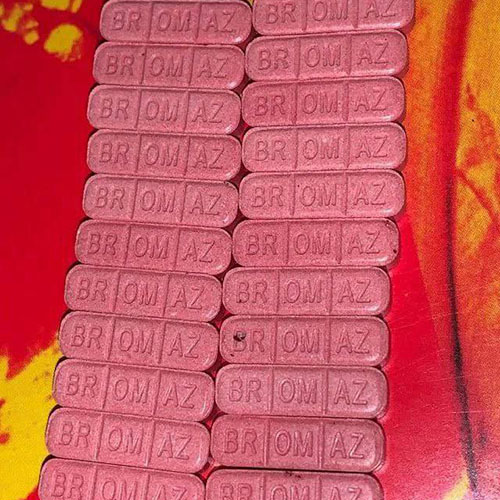
Bromazolam bars are compressed tablets designed to mimic the appearance of pharmaceutical-grade Alprazolam (Xanax). They typically feature the “ladder” shape with multiple score marks, allowing the tablet to be broken into smaller segments.
However, unlike pharmaceutical bars, these are produced in unregulated laboratories. While they are often marketed as “4mg” or “2mg” bars, their actual Bromazolam content can vary significantly, leading to unpredictable effects. In the Canadian research chemical market, they are frequently sold under the guise of “not for human consumption.”
The Legal Status of Bromazolam Bars in Canada
It is critical to understand that the form of the substance (powder vs. bar) does not change its legal standing under Canadian law.
-
Schedule IV Classification: Under the Controlled Drugs and Substances Act (CDSA), Bromazolam is a Schedule IV substance in Canada.
-
Illegal Distribution: Selling Bromazolam in “bar” or tablet form strongly implies intent for human consumption. In Canada, selling any scheduled substance for consumption without a license from Health Canada is a serious criminal offense.
-
Importation Risks: The CBSA (Canada Border Services Agency) actively intercepts shipments of Bromazolam bars entering Toronto and Montreal. Because they are often disguised as legitimate medication, they are subject to immediate seizure and can lead to criminal investigations.
Market Trends: Ontario, Quebec, and Toronto
The prevalence of Bromazolam bars has shifted dramatically in the last two years:
-
Toronto & The GTA: The Toronto Drug Checking Service has reported that a vast majority of “Xanax” samples seized or submitted for testing in the GTA actually contain Bromazolam. These bars are often mixed with caffeine or other binders, but occasionally contain trace amounts of potent synthetic opioids.
-
Montreal & Quebec: In Quebec, health alerts from the MSSS have highlighted the presence of high-potency Bromazolam bars in the local supply, often linked to an increase in “benzo-dope” related emergencies in Montreal and Gatineau.
-
The “Pressie” Culture: Online forums and “research chemical” vendors often market these bars to Canadians, but the risk of receiving a product contaminated with fentanyl or nitazenes (like Protonitazene) is a significant concern for public health officials.
Potency and Comparison to Alprazolam
Bromazolam is often described as having a “heavy” or “sedative” profile compared to Alprazolam.
-
Dosage Inconsistency: A “bar” labeled as 2mg might actually contain 0.5mg or 5mg of Bromazolam.
-
Duration: Bromazolam typically has a longer half-life than Alprazolam, meaning the effects (and the window for potential overdose) last longer.
-
Amnestic Effects: High-potency Bromazolam bars are notorious for causing “blackouts,” where the user remains mobile but has no memory of their actions.
Safety and Harm Reduction in Canada
Because Bromazolam bars in Canada are unregulated, safety must be the primary concern for anyone interacting with these substances in a professional or laboratory capacity.
1. Analytical Testing is Mandatory
For laboratories in Ontario and Quebec, identifying Bromazolam requires advanced equipment. Standard reagent tests may provide a color change indicating a “benzodiazepine,” but they cannot distinguish between Bromazolam and other analogs. Only LC-MS/MS or GC-MS testing can provide a definitive profile.
2. The Naloxone Misconception
It is a common myth in Canada that Naloxone can reverse a benzodiazepine overdose. Naloxone does not work on Bromazolam. If a Bromazolam bar is contaminated with an opioid, Naloxone will help the opioid component, but the person will remain heavily sedated from the Bromazolam.
3. Withdrawal Risks
Physical dependence on Bromazolam bars can form rapidly. Withdrawal from high-potency benzodiazepines is medically dangerous and can lead to life-threatening seizures. In Canada, medical professionals recommend a supervised “taper” using long-acting benzodiazepines like Diazepam.
Conclusion: A High-Risk Landscape
While Bromazolam bars in Canada are a subject of intense scientific and social interest, they carry profound legal and health risks. For legitimate researchers in Toronto, Montreal, and beyond, the focus remains on using high-purity powder for analytical standards rather than unreliable pressed tablets.
Be the first to review “Bromazolam Bars”
Related products

Research Chemicals

Research Chemicals

Research Chemicals
Research Chemicals

Research Chemicals

Research Chemicals

Research Chemicals

Research Chemicals
Reviews
There are no reviews yet.